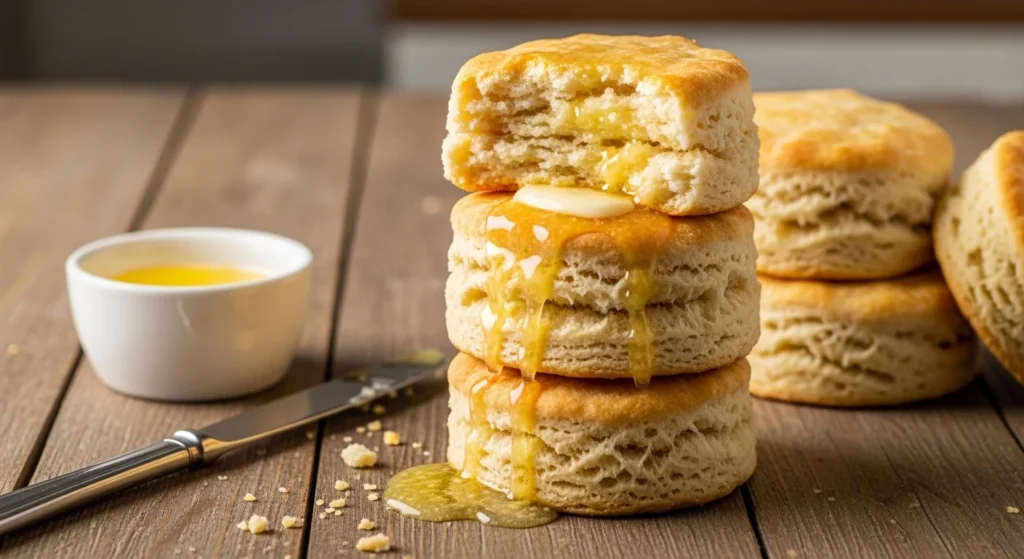
There’s something magical about a tray of buttermilk biscuits rising high in the oven — golden tops, tender layers, and that buttery aroma filling the kitchen. Split one open, and you should see soft, flaky layers pulling apart with ease.
If your biscuits have ever turned dense or flat, don’t worry. Soft, flaky Southern-style biscuits come down to cold butter, the right flour, gentle lamination, and a hot oven blast.
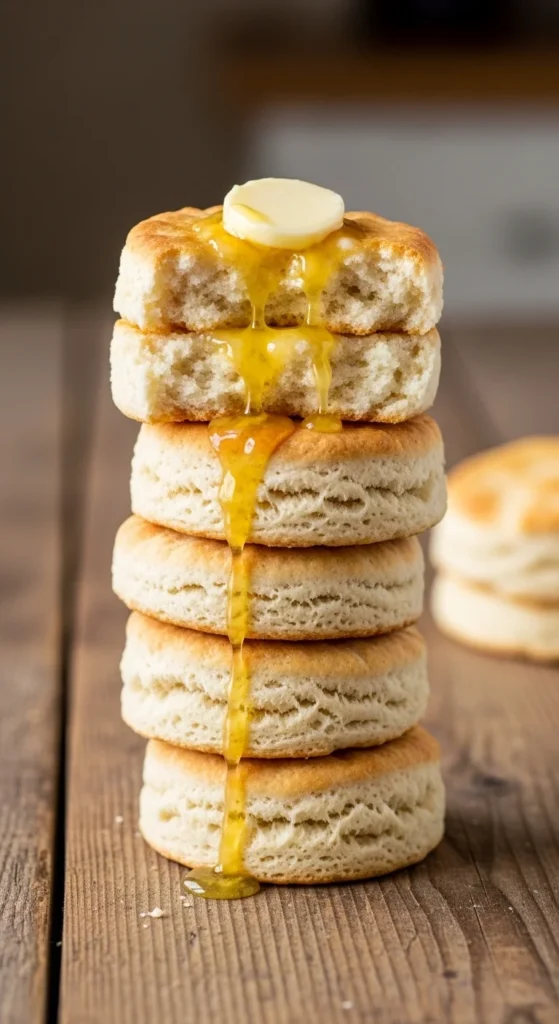
Let’s walk through exactly how to make buttermilk biscuits that rise 2 inches tall and stay soft inside.
Start With the Right Flour (It Matters More Than You Think)
Traditional Southern bakers swear by low-protein flour — especially White Lily flour, known for its soft wheat blend (about 8% protein).
Lower protein means:
- Less gluten development
- More tenderness
- Softer crumb
If you can’t find White Lily, use:
- Pastry flour
- Or substitute 2 tablespoons cornstarch per cup of all-purpose flour
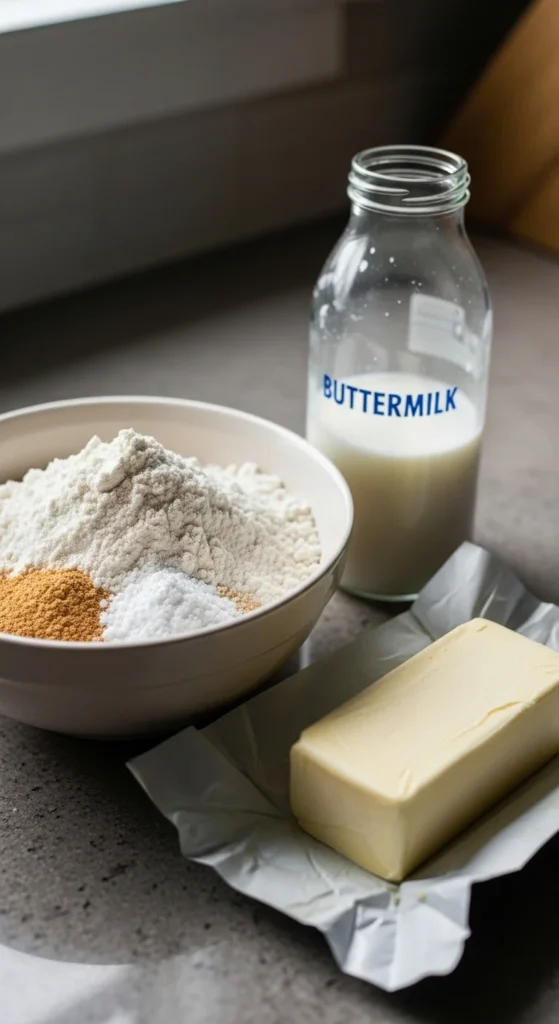
For 12–15 tall biscuits, you’ll need:
- 4 cups low-protein flour
- 1 tablespoon baking powder
- ¼ teaspoon baking soda
- 1 teaspoon salt
- 1 cup frozen butter
- 1½–1¾ cups full-fat buttermilk
Fresh leaveners are key. Expired baking powder = flat biscuits.
Keep Butter Ice-Cold (Grate for Maximum Flake)
Cold butter creates steam when it hits the hot oven. Steam makes layers.
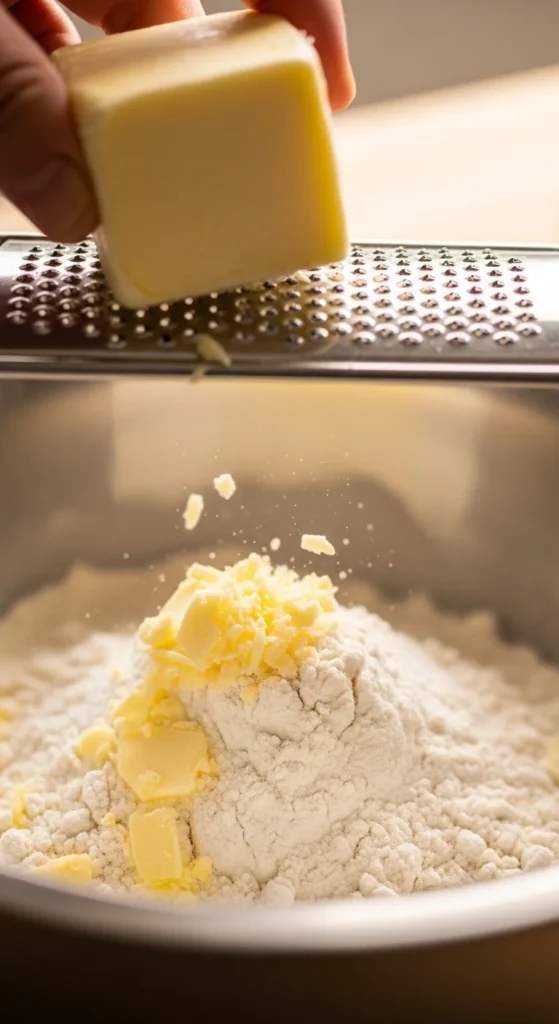
Instead of cubing butter, try grating it frozen.
Grated frozen butter:
- Distributes evenly
- Stays cold longer
- Creates consistent flaky layers
Toss the grated butter into the flour mixture and gently cut it in with a pastry blender or fork until you see pea-sized crumbs.
Do not overmix.
Visible butter bits = tall biscuits.
Add Buttermilk Until It Looks Like Wet Sand
Buttermilk does more than add flavor.
Its acidity:
- Tenderizes the dough
- Reacts with baking soda for lift
- Adds tangy richness
Pour in 1½ cups of cold buttermilk gradually.
Mix gently until the dough looks like wet beach sand — shaggy, slightly sticky, but holding together when pressed.
If it’s dry and crumbly, add a splash more buttermilk.
Shaggy dough = soft interior.
Use the 3-Fold Lamination Trick
This step creates layers.
Turn the dough onto a lightly floured surface.
With flour-dusted hands:
- Pat into a rectangle about ¾ inch thick.
- Fold one side into the center.
- Fold the other side over it (book fold).
- Rotate 90 degrees.
- Pat and repeat.
Do this 3 times.
No rolling pin needed. Just pat gently.
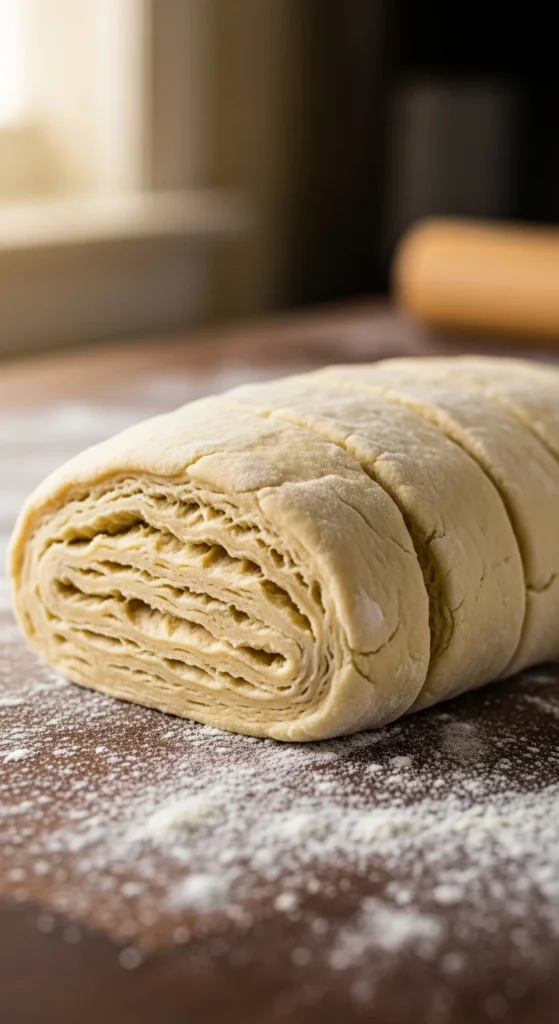
This stacking method builds flaky layers without overworking the dough.
Cut Straight Down (Never Twist)
Use a sharp 2½–3 inch biscuit cutter.
Press straight down.
Do not twist.
Twisting seals the edges and prevents biscuits from rising fully.
Before cutting, you can even chill your cutter for extra insurance against melting butter.
After cutting, gently press scraps together and cut again — minimal handling only.
Arrange Biscuits Touching for Maximum Height
Place biscuits in a cast iron skillet or baking pan so they are just touching.
Touching biscuits help each other rise upward — this “shoulder push” effect creates taller biscuits.
If you want crisp edges all around, space them apart. But for maximum height, let them touch.
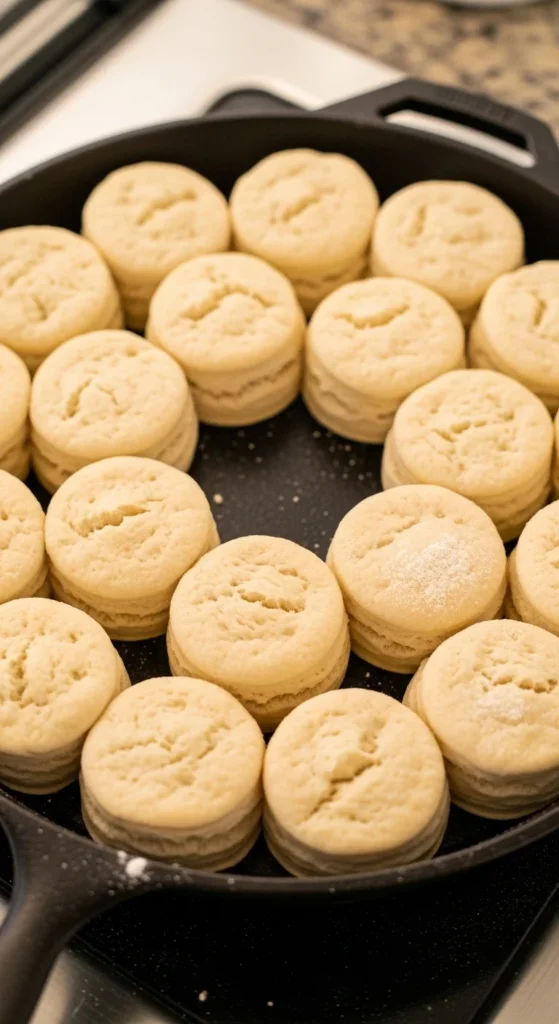
For even rise, press a small thumb indent in the center of each biscuit. This helps them lift evenly instead of doming unevenly.
Bake at 500°F for a Fast Rise
Preheat your oven to 500°F.
Yes, really.
High heat causes rapid steam release before the structure sets, creating maximum lift.
Bake for 10–12 minutes until:
- Tops are golden brown
- Layers look tall and separated
- Bottoms are crisp
Rotate the pan halfway through for even browning.
Finish With Honey Butter
Right out of the oven, brush biscuits with melted butter.
For a sweet touch:
- Mix honey into the melted butter
For savory:
- Add a pinch of sea salt
- Or brush with garlic herb butter
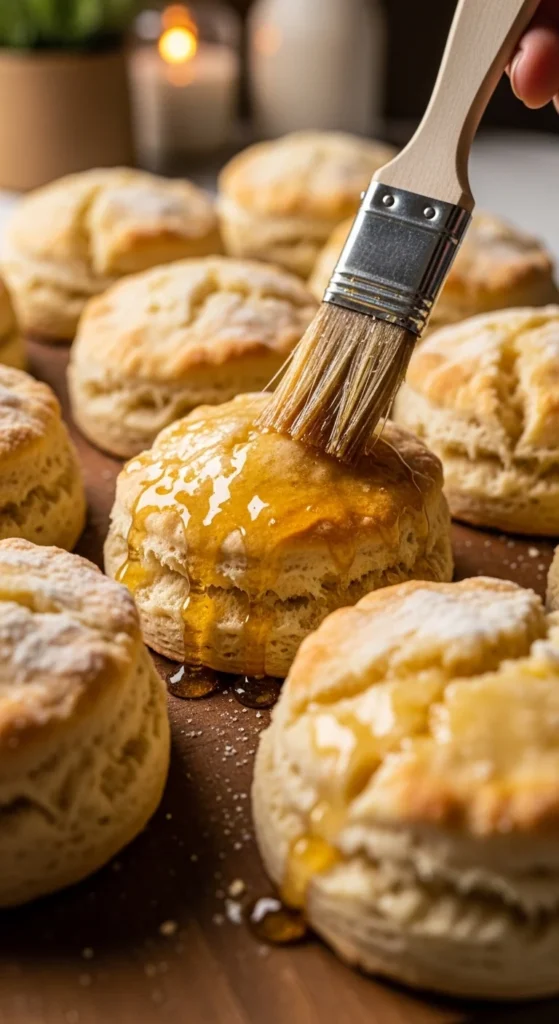
This final step keeps the tops soft and adds shine.
Common Biscuit Problems (And Easy Fixes)
Dense “Hockey Pucks”
- Butter wasn’t cold
- Overmixed dough
- Twisted cutter
- Oven not hot enough
Tough Texture
- Wrong flour (too much protein)
- Too much kneading
Flat or Uneven Rise
- Didn’t place biscuits touching
- Skipped lamination
- Under-measured leaveners
Dry and Crumbly
- Not enough buttermilk
- Overbaked
Remember: soft dough is good dough.
Flavor Variations
Once you master the classic, try:
- Cheddar and jalapeño
- Garlic herb
- Cornmeal crunch
- Honey cinnamon
- Butter-lard 50/50 hybrid for ultra-flake
The method stays the same — cold butter, gentle folds, hot oven.
Final Takeaway
Soft, flaky buttermilk biscuits come down to five essentials:
- ✔ Use low-protein flour (like White Lily)
- ✔ Grate frozen butter
- ✔ Stop at shaggy dough
- ✔ Fold 3 times for layers
- ✔ Bake at 500°F and don’t twist the cutter
Master these, and you’ll get tall, tender biscuits every single time.
Save this recipe for later — because once you taste a perfectly layered buttermilk biscuit, you’ll never settle for flat again. 🧈✨