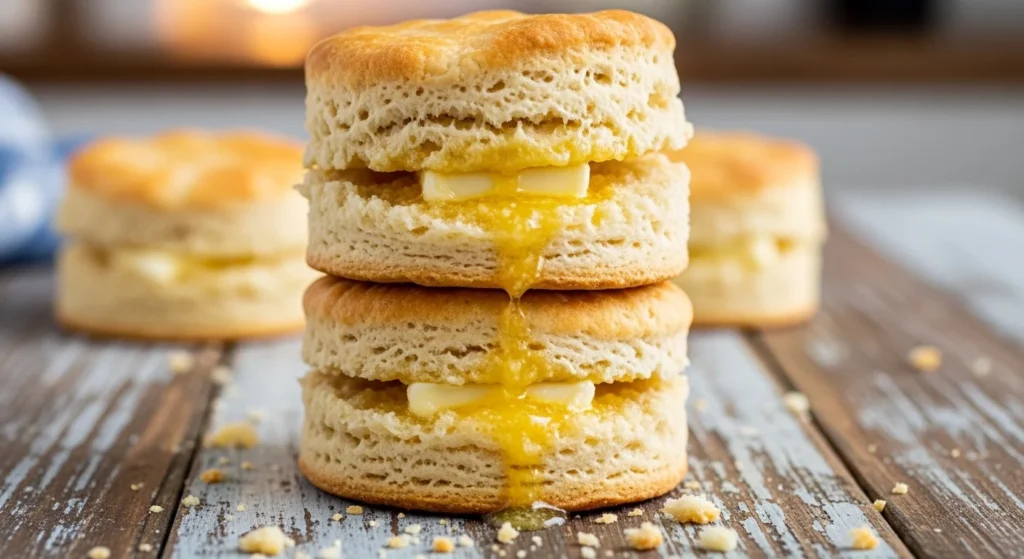
There’s nothing quite like pulling a batch of tall, golden biscuits from the oven — flaky layers pulling apart, steam escaping from the center, and butter melting into every crack.
Homemade biscuits don’t have to be intimidating. In fact, once you understand the science behind flaky layers and high rise, you’ll realize they’re surprisingly simple.
The secret? Cold butter chunks, gentle lamination, and a hot oven blast.
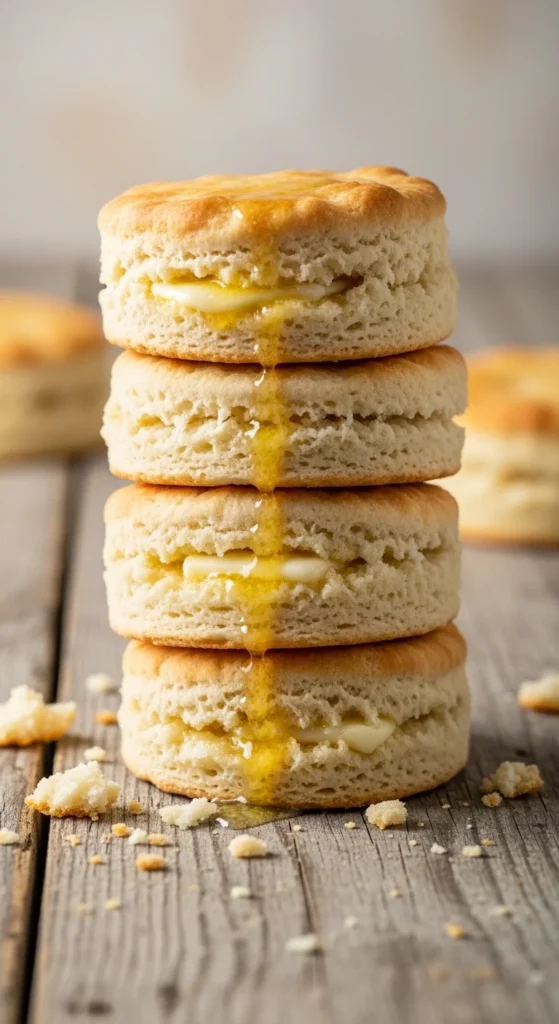
Let’s walk through how to make homemade biscuits from scratch like a pro — with bakery-level height and tenderness.
Start With the 1-2-3 Ratio (The Pro Foundation)
Professional biscuit makers love the 1-2-3 ratio because it scales perfectly:
- 1 part fat
- 2 parts liquid
- 3 parts flour
For a classic batch (about 8 biscuits):
- 300g flour (about 2 cups)
- 100g cold butter
- 200g buttermilk (about ¾–1 cup)
- 1 tablespoon baking powder
- ¼ teaspoon baking soda
- 1 teaspoon salt
This formula keeps the balance right — not too dry, not too wet.
Low-protein flour works best for tenderness. Southern bakers often prefer White Lily flour because its lower protein content produces a softer crumb.
Keep Butter Cold — and Size It Right
Flaky layers happen when butter melts in the oven and releases steam.
Instead of tiny crumbs, aim for lentil-sized butter chunks — slightly larger than pea-sized.
You can:
- Use a pastry blender
- Pulse in a food processor (10–12 quick bursts)
- Grate frozen butter for even distribution
Cold tools help too. Chill your bowl and cutter if your kitchen is warm.
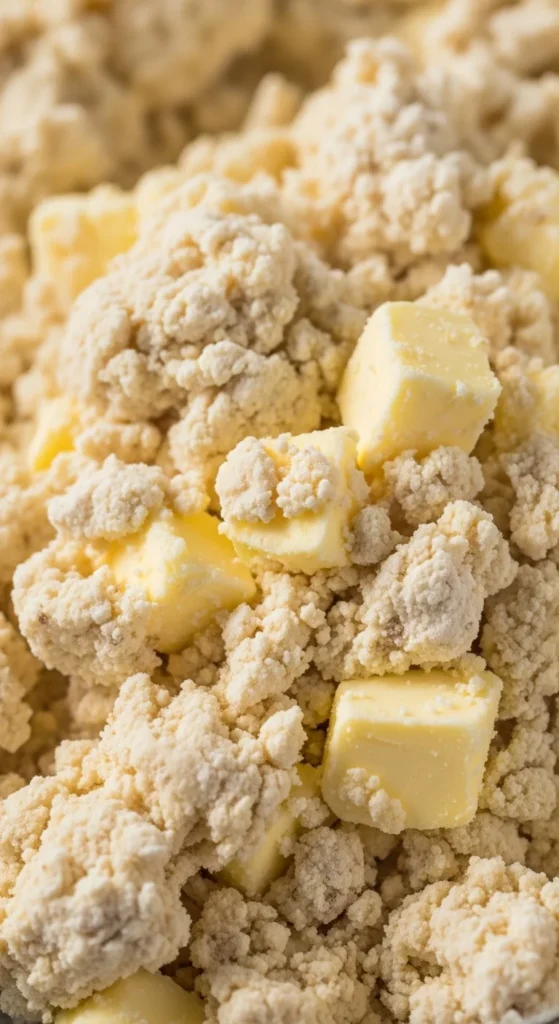
Visible butter pieces = visible flaky layers later.
Mix to “Shaggy Wet Sand”
Add cold buttermilk gradually.
Stir gently until the dough resembles wet beach sand — soft, slightly sticky, but not smooth.
This shaggy texture is crucial.
If the dough looks smooth and elastic, it’s already overmixed.
Buttermilk isn’t just for flavor. Its acidity reacts with baking soda, giving biscuits an extra lift and tender crumb.
If you don’t have buttermilk, you can mix:
- 1 cup milk + 1 tablespoon vinegar or lemon juice
Let it sit for 5 minutes before using.
Use the Stack-Fold Lamination Trick
This is where pros create layers.
Turn the shaggy dough onto a lightly floured surface.
Pat (don’t roll!) into a rectangle about ¾ inch thick.
Now:
- Fold one side into the center.
- Fold the other side over it (like a book).
- Rotate.
- Pat again.
- Repeat 3–4 times.
Each fold multiplies layers.
3 folds = 9 layers.
4 folds = up to 16 flaky planes.
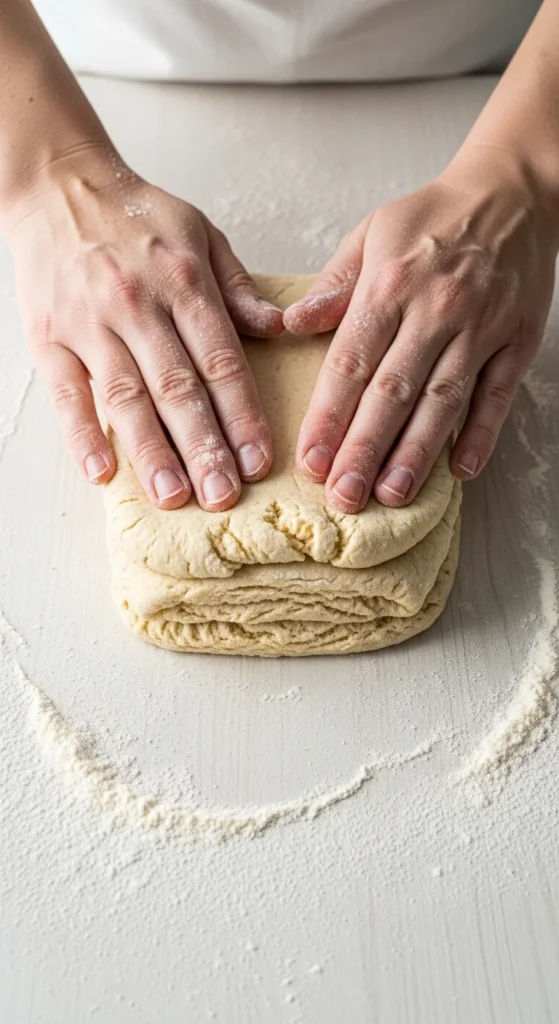
Patting preserves air pockets. Rolling compresses them.
Cut Straight Down (No Twisting!)
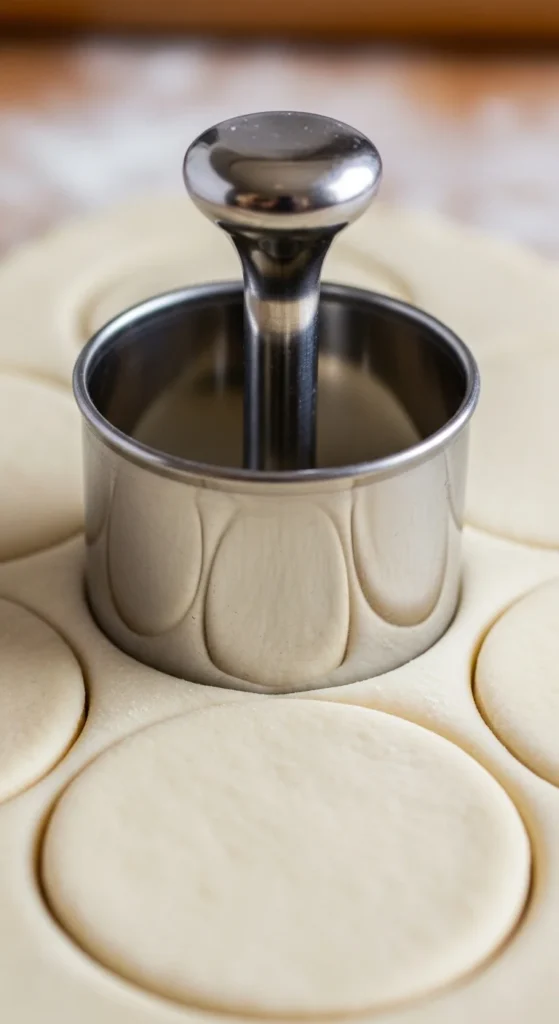
Use a sharp 2½–3 inch biscuit cutter.
Press straight down.
Do not twist.
Twisting seals the edges and prevents vertical rise.
After cutting, avoid re-rolling scraps aggressively. Gently press them together and cut once more — excessive reworking reduces flake.
Arrange Biscuits Touching for Maximum Lift
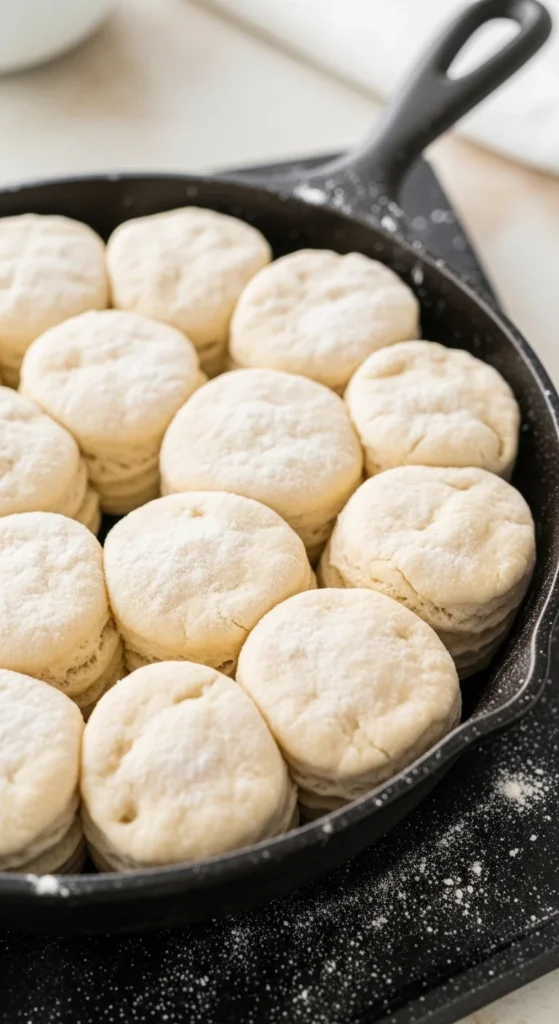
Place biscuits close together in a cast iron skillet or baking pan.
Touching biscuits support each other as they rise — this “shoulder lift” effect helps them climb taller.
If spaced apart, they spread more than they rise.
For evenly domed tops, gently press a small thumbprint in the center before baking.
Cast iron is ideal because it:
- Retains heat evenly
- Produces crisp bottoms
- Encourages tall rise
Bake Hot — But Not Too Hot
Professional testing shows the sweet spot is 410–450°F.
- 500°F can work, but 410–450°F gives better balance between lift and golden edges.
- Bake for 12–15 minutes.
Rotate halfway for even browning.
You’re looking for:
- Golden tops
- Clearly visible layers
- Crisp bottoms
High heat causes rapid steam release before the dough sets — that’s what gives you height.
Finish With Melted Butter
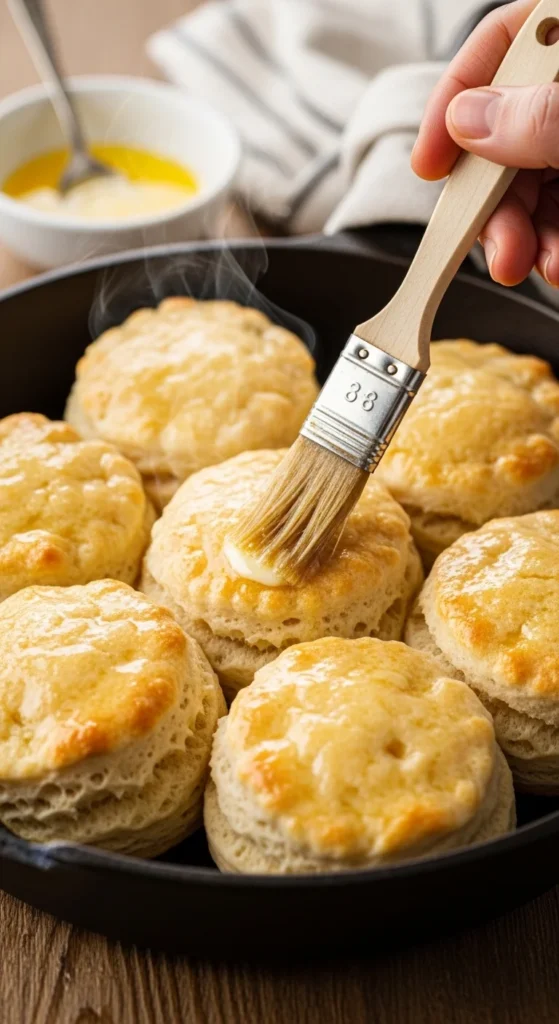
Right out of the oven, brush with melted butter.
This:
- Adds shine
- Enhances flavor
- Locks in moisture
For a sweeter twist, add honey. For savory, mix in garlic or herbs.
Avoid Common Biscuit Mistakes
Flat, Dense Biscuits
- Twisted cutter
- Warm butter
- Expired baking powder
Tough or Gummy Texture
- Overmixing
- High-protein flour
- Overhandling scraps
Dry Interior
- Not enough buttermilk
- Overbaked
Remember: sticky dough is better than dry dough.
Pro-Level Extras
Want to level up?
- Use half-and-half instead of milk for richer crumb.
- Try reverse lamination (folding wet into dry gently).
- Chill shaped biscuits for 15 minutes before baking.
- Experiment with cheddar, jalapeño, or herbs.
But the core stays the same: cold butter, gentle folds, hot oven.
Final Takeaway
Making homemade biscuits like a pro comes down to a few simple rules:
- ✔ Follow the 1-2-3 ratio
- ✔ Keep butter cold and lentil-sized
- ✔ Stop mixing at shaggy dough
- ✔ Use stack-fold lamination
- ✔ Cut straight down and bake touching
Master these, and your biscuits will rise tall, tender, and flaky every time.
Save this guide for later — because once you learn to bake biscuits from scratch like a pro, you’ll never go back to store-bought again. 🧈✨