Few desserts feel as dramatic as a cheesecake. It looks elegant, tastes rich, and somehow always steals the spotlight. But let’s be honest—the fear of cracks can turn cheesecake baking into a stress fest. One tiny mistake, and that smooth, dreamy top can split right down the middle.
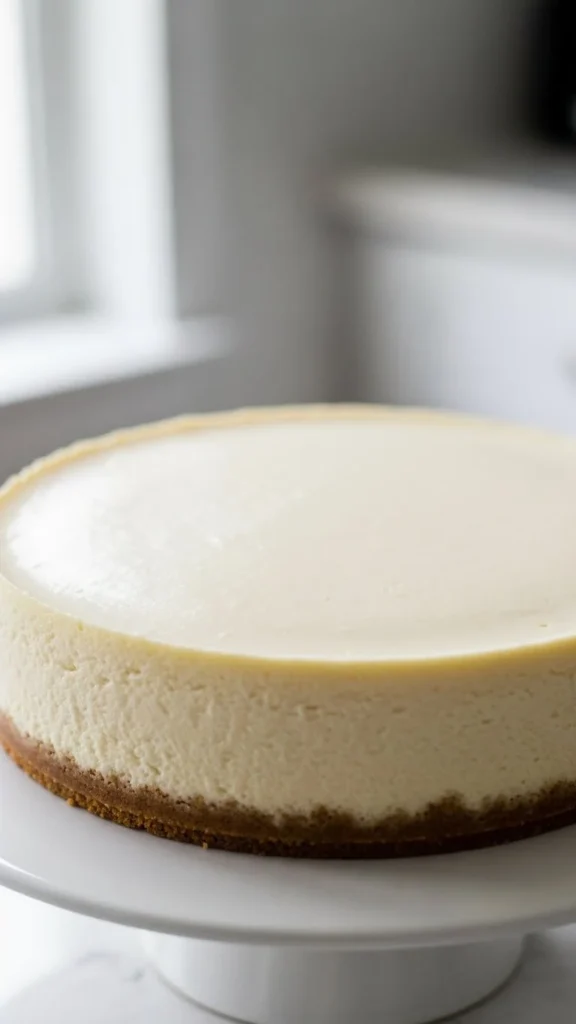
Here’s the good news: crack-free cheesecake isn’t about luck. It’s about temperature, gentle mixing, and patience. Once you understand what causes cracks, avoiding them becomes surprisingly easy.
Why Cheesecakes Crack in the First Place
Cracks happen when cheesecake batter is stressed—usually by sudden temperature changes or too much air.
The most common culprits:
- Overmixing the batter
- Baking at too high a temperature
- Skipping moisture in the oven
- Cooling the cheesecake too quickly
Cheesecake is more custard than cake. Treat it gently, and it will reward you with a silky, flawless finish.
Ingredients That Guarantee a Creamy Texture
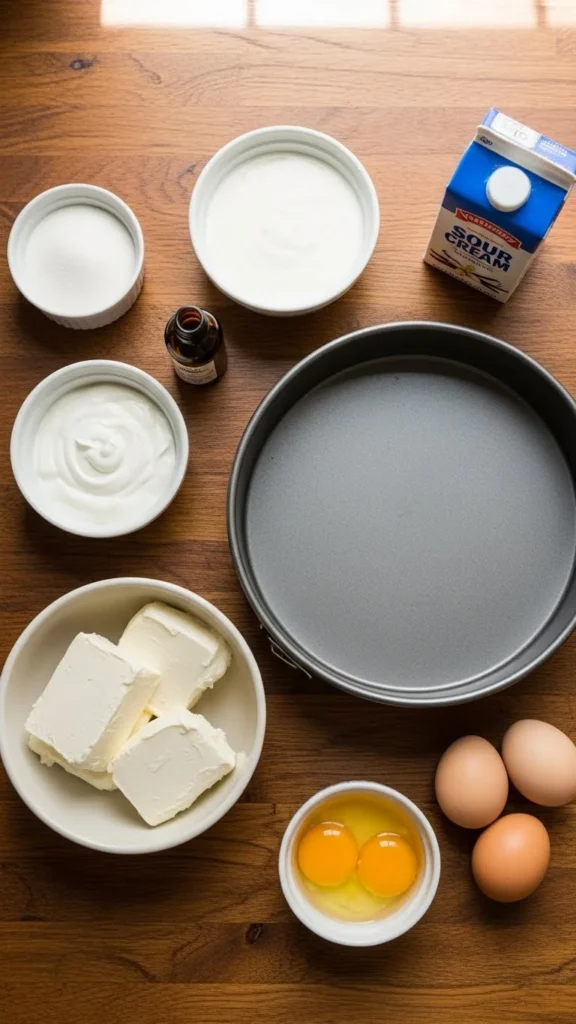
Cheesecake doesn’t need many ingredients, but temperature matters more than quantity.
Cheesecake essentials:
- Cream cheese, fully softened (this is non-negotiable)
- Granulated sugar for smooth sweetness
- Eggs, room temperature
- Sour cream or heavy cream for richness
- Vanilla extract
- A pinch of salt
Cold ingredients don’t blend well and force you to overmix—one of the fastest paths to cracks.
The Mixing Method That Prevents Cracks
This step alone fixes most cheesecake problems.
Beat low and slow
Use low speed when mixing cream cheese and sugar. You’re aiming for smooth, not fluffy. Fluffy batter = trapped air = cracks.
Add eggs carefully
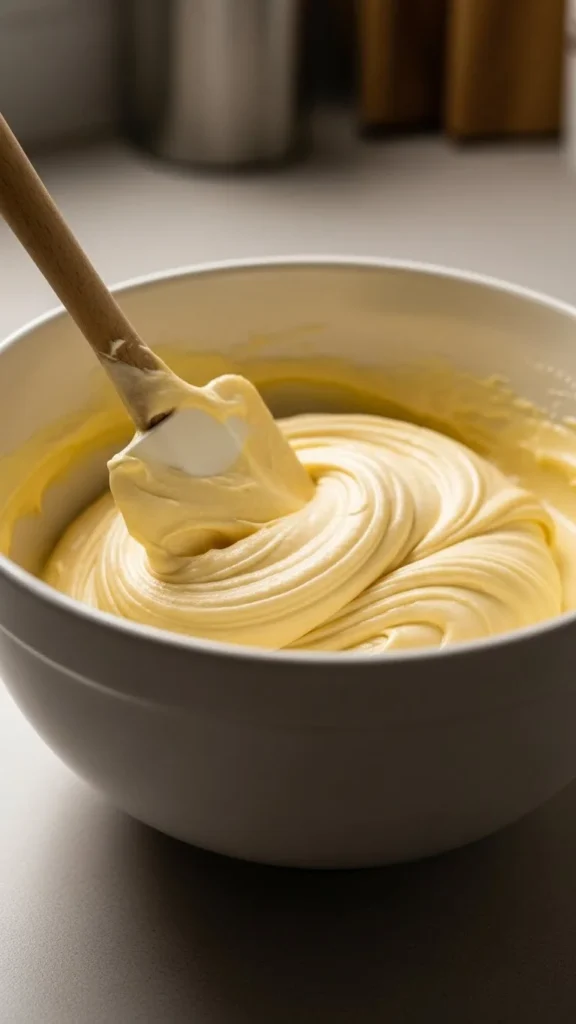
Add eggs one at a time, mixing just until incorporated. Stop scraping the bowl as soon as the batter looks uniform.
Finish gently
Stir in sour cream, vanilla, and salt by hand or on the lowest mixer setting. The batter should look thick, glossy, and calm—never foamy.
Preparing the Pan the Right Way
A springform pan is standard, but it needs a little prep.
Crust tips:
- Press crumbs firmly but not aggressively
- Bring crust slightly up the sides
- Pre-bake briefly for structure
Wrap the outside of the pan in two layers of foil if using a water bath. Even if you skip the bath, this helps insulate the cheesecake.
The Water Bath: Optional but Powerful
A water bath (bain-marie) keeps the oven environment moist and gentle.
Why it works:
- Prevents rapid rising
- Keeps the top from drying out
- Promotes even baking
To use one:
- Place the wrapped pan in a larger roasting pan
- Pour hot water halfway up the sides
If you skip the bath, place a pan of hot water on the oven’s lower rack for added humidity.

Baking Low and Slow for Best Results
Set your oven to 325°F (165°C). Cheesecake hates high heat.
Bake until:
- The edges look set
- The center jiggles slightly like gelatin
- The top stays pale and matte
Avoid opening the oven door early—it causes temperature shock.
Cooling: The Most Overlooked Step
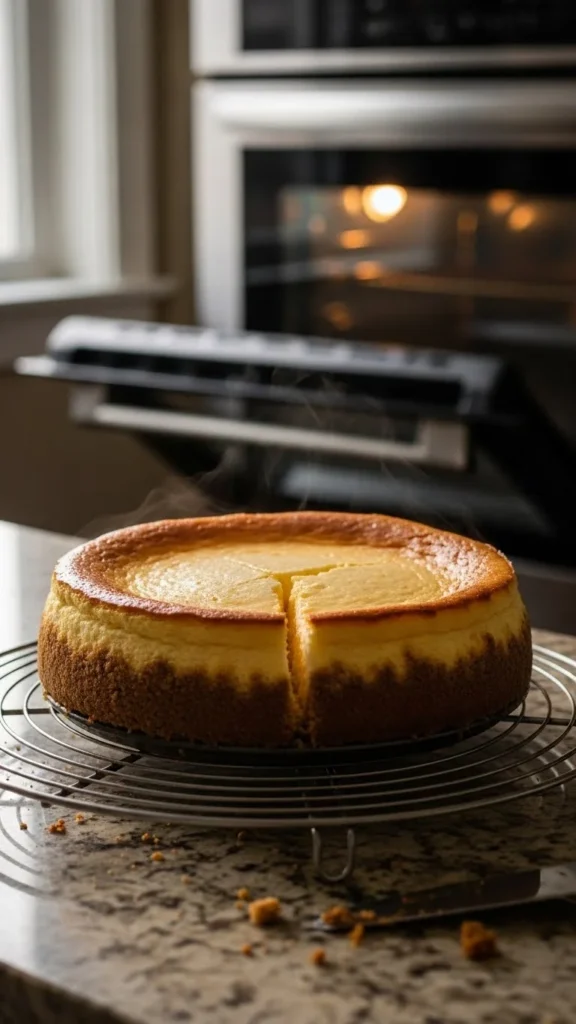
This is where cracks often appear—even after perfect baking.
The safe cooling method:
- Turn off the oven
- Crack the oven door open slightly
- Let cheesecake cool inside for 1 hour
Then:
- Remove from oven
- Cool completely at room temperature
- Refrigerate at least 4 hours (overnight is best)
Slow cooling prevents sudden contraction, which causes cracks.
If a Crack Happens Anyway (No Panic)
Even professionals get cracks sometimes. Luckily, cheesecake is forgiving.
Easy fixes:
- Fresh berries
- Sour cream topping
- Chocolate ganache
- Whipped cream swirls
No one complains about a cheesecake with toppings.
Final Takeaway
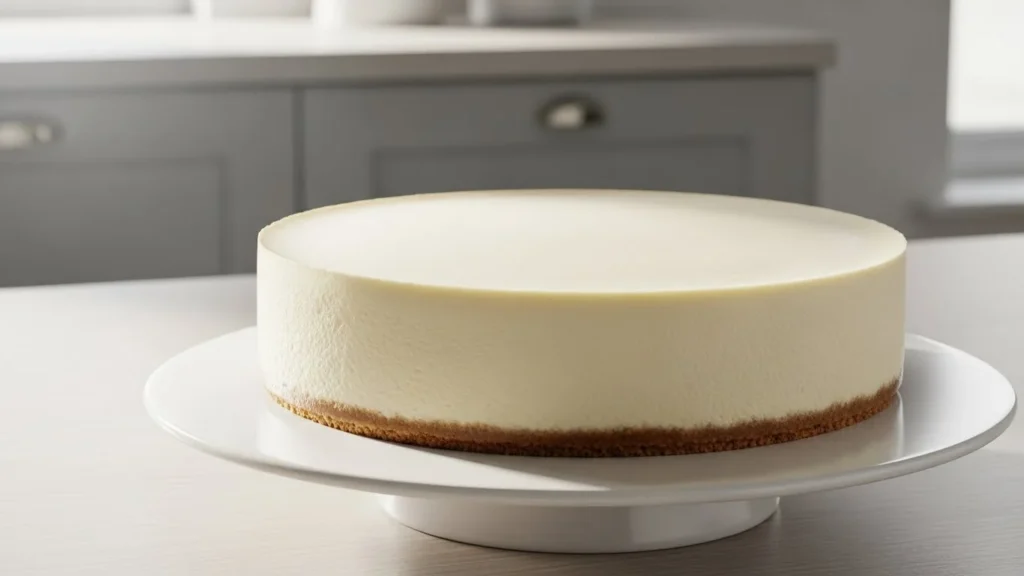
A creamy, crack-free cheesecake comes down to room-temperature ingredients, gentle mixing, low heat, and slow cooling. Skip the rush, trust the process, and your cheesecake will come out smooth, rich, and celebration-ready every time.
Save this guide for your next special occasion bake—and enjoy cheesecake without the stress 🍰✨