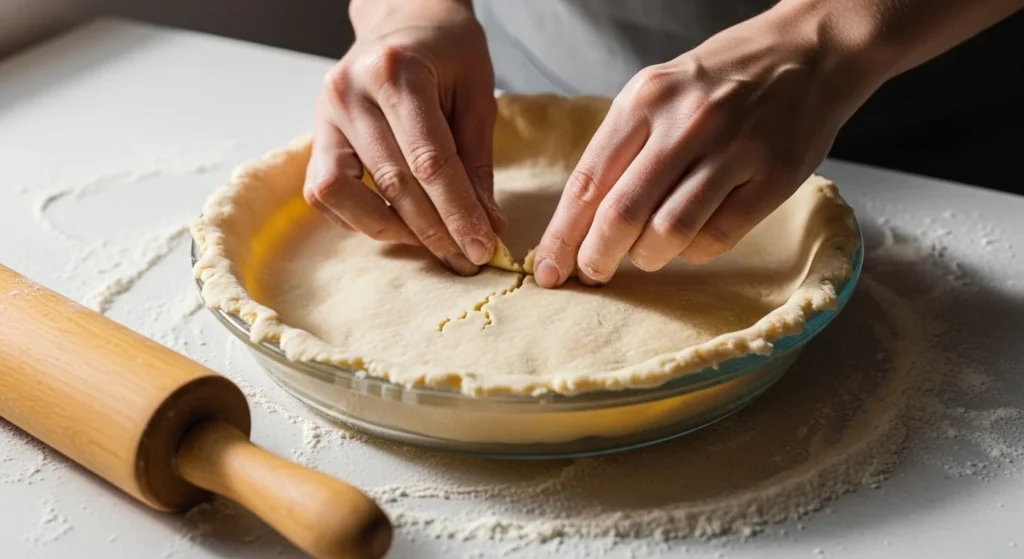
Few baking moments are more frustrating than spending time preparing a pie—only to discover the crust is dry, tough, or soggy. Even experienced bakers run into pie crust problems from time to time.
The good news? Most pie crust issues come down to just a few common mistakes involving temperature, hydration, and technique. Once you know what causes these problems, they’re surprisingly easy to fix.
Whether your dough is cracking on the counter or your crust keeps shrinking in the oven, this guide will help you troubleshoot like a pro.
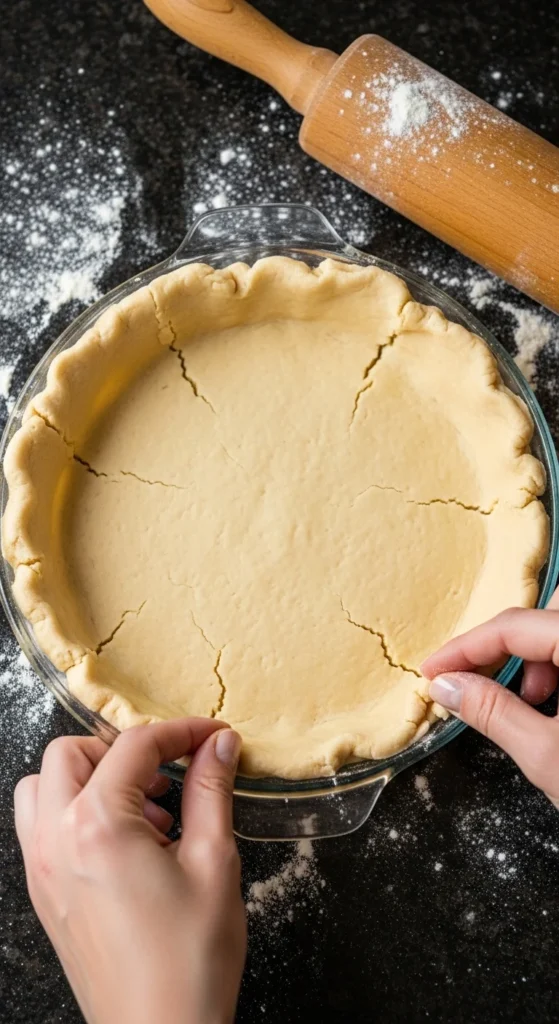
Why Pie Crust Problems Happen
Most pie crust failures fall into five categories:
- Dry or crumbly dough
- Tough crust
- Shrinking during baking
- Soggy bottom crust
- Burning edges
In fact, pastry experts say over 90% of pie crust problems are caused by incorrect hydration or temperature.
The key is learning how to recognize the issue early so you can fix it before the pie goes into the oven.
Fixing Dry or Crumbly Pie Dough
If your dough falls apart when you try to roll it, the problem is usually not enough water.
Pie dough should hold together when pressed but should not feel sticky.
The squeeze test
Grab a small handful of dough and squeeze it.
- If it holds together, it’s ready.
- If it crumbles, it needs more liquid.
How to fix it
Add ice water one tablespoon at a time and gently mix until the dough forms soft clumps.
Important tip:
- Always use ice water
- Cold water keeps butter from melting
Preventing Tough Pie Crust
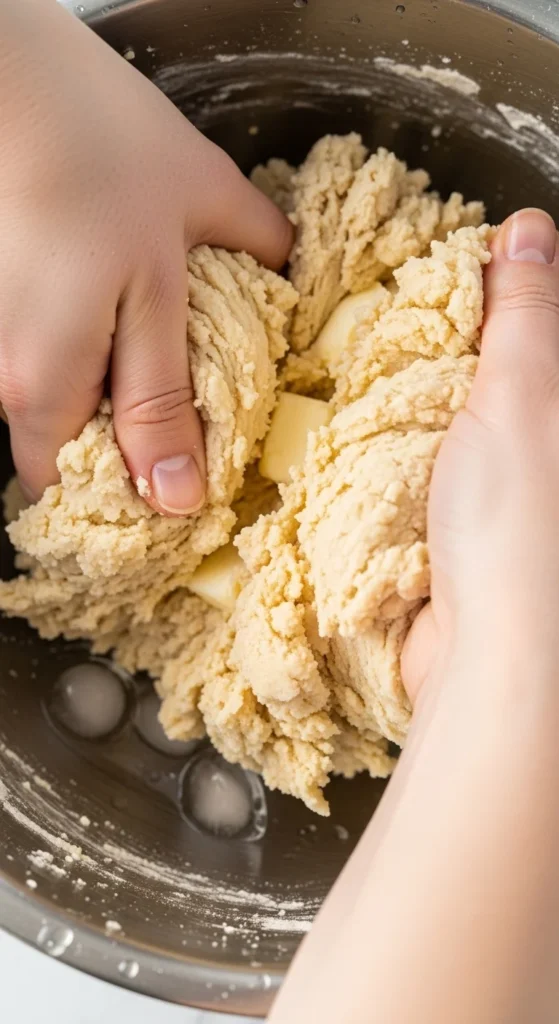
A tough crust usually happens when the dough is overworked.
When flour mixes too much with liquid, it develops gluten, which makes the dough chewy instead of flaky.
How to avoid overworking
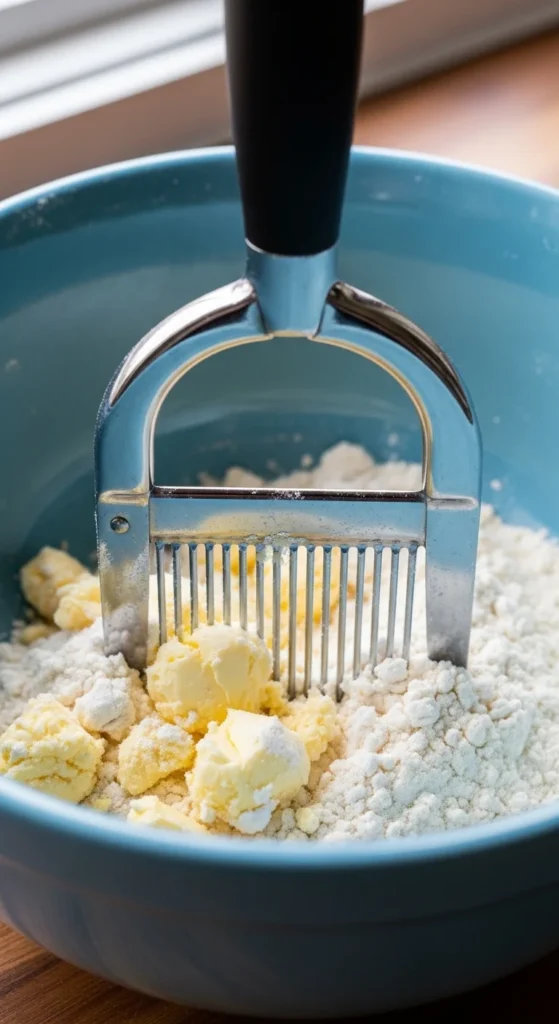
Use one of these mixing methods:
- Food processor method: Pulse only 8–12 times
- Fork method: Toss ingredients gently
- Pastry cutter: Stop when butter forms pea-sized bits
Key rule:
Once the dough comes together, stop mixing.
Stopping Pie Crust From Shrinking
Have you ever rolled out a perfect crust, only to watch it slide down the sides of the pan while baking?
This happens when dough is too warm or stretched too tightly.
The shrink-proof method
Follow this simple timeline:
- Roll dough and place in pie pan
- Leave a ½-inch overhang around the edge
- Fold excess dough under and crimp on the rim
- Chill the pan for 30 minutes before baking
Why chilling works:
- Butter firms up again
- Gluten relaxes
- Dough holds its shape in the oven
How to Prevent a Soggy Bottom
Nothing ruins a pie faster than a soggy crust.
This usually happens when wet fillings soak into unbaked dough.
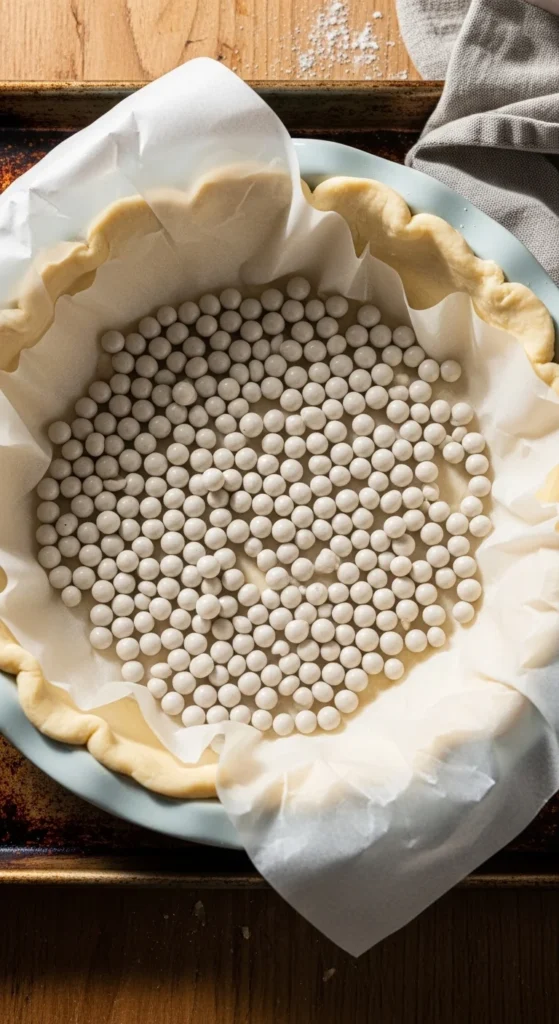
The solution: blind baking
Blind baking means partially baking the crust before adding filling.
Steps for blind baking
- Line the crust with parchment paper
- Fill with pie weights or dried beans
- Bake at 400°F for 15–20 minutes
The weights prevent the crust from:
- Puffing up
- Sliding down the pan
Bonus trick
Brush the crust lightly with egg white after blind baking. This creates a seal that helps block moisture from fillings.
Fixing Cracks or Tears in Dough
Sometimes dough cracks while rolling or transferring to the pan. Luckily, pie dough is very forgiving.
Easy repair method
- Dip your finger in cold water
- Press cracked edges together
- Smooth gently
For larger tears, simply patch the area with extra dough scraps.
Because the crust bakes into one piece, the repair will barely be noticeable.
Prevent Burning Pie Edges
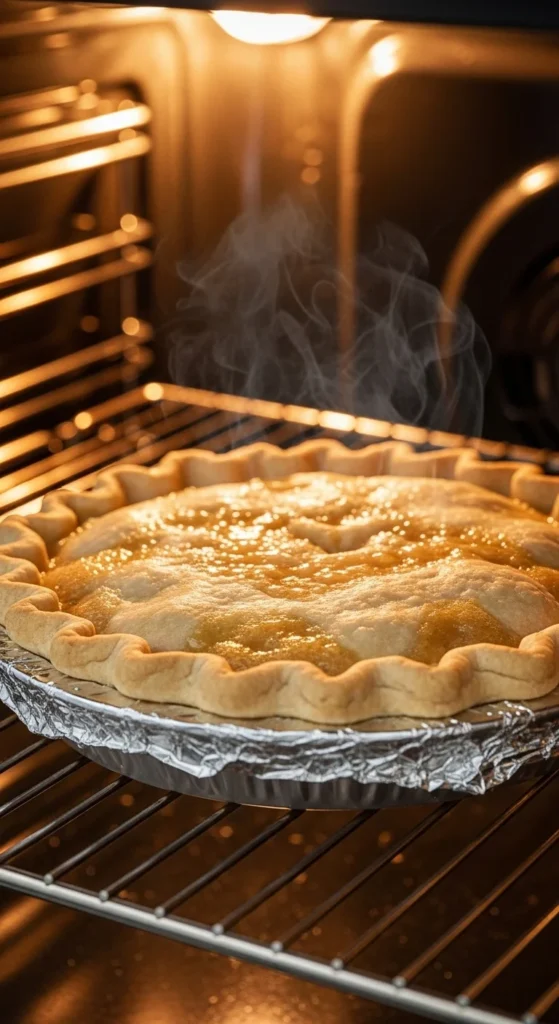
If the edges of your pie turn dark while the center is still baking, you need to protect the crust rim.
The foil shield trick
After the first 20 minutes of baking:
- Wrap a ring of aluminum foil around the pie edge
- Continue baking normally
You can also use:
- Silicone pie shields
- Adjustable metal crust guards
These tools protect the edges while the filling finishes cooking.
Getting a Golden, Flavorful Crust
If your pie crust looks pale or dull, it may simply need a finishing touch.
Try an egg wash
Before baking, brush the crust lightly with:
- Beaten egg
- Or egg + water mixture
Then sprinkle with:
- Sugar (for sweet pies)
- Flaky salt (for savory pies)
This creates:
- A beautiful golden color
- Extra flavor
- A bakery-style shine
When Dough Is Too Cold to Roll
Sometimes dough straight from the refrigerator feels like a brick.
If it cracks while rolling, it’s probably too cold.
Quick fix
Let the dough sit at room temperature for 5–10 minutes.
This softens the butter just enough to make the dough flexible again.
Avoid waiting too long though, or the butter may start melting.
Final Thoughts
Pie crust problems happen to everyone—even professional bakers. The key is understanding what your dough is telling you.
Remember these simple fixes:
- Add ice water if dough is crumbly
- Stop mixing to avoid tough crust
- Chill dough 30 minutes to prevent shrinking
- Use blind baking to stop soggy bottoms
- Protect edges with a foil shield
Once you learn these techniques, pie crust becomes much less intimidating and far more enjoyable to make.
So next time your dough cracks or your crust shrinks, don’t panic—you now know exactly how to fix it.
And if you found these tips helpful, save this guide for your next pie-baking day! 🥧