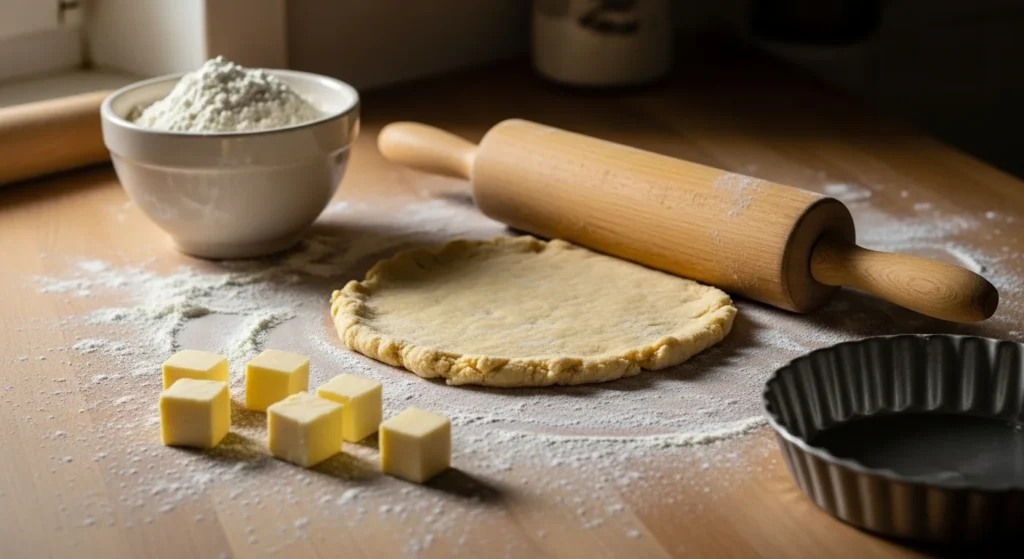
A great savory pie starts long before the filling. It starts with the crust—that buttery, flaky, golden layer that holds everything together and makes every bite feel a little more special. Whether you’re baking a cozy chicken pot pie or a rich, custardy quiche, a good savory pie crust can take it from ordinary to unforgettable.
The best part? It’s much easier than it sounds. You don’t need fancy tools, pastry-school skills, or a lot of extra ingredients. You just need cold fat, a light hand, and a few smart tricks.
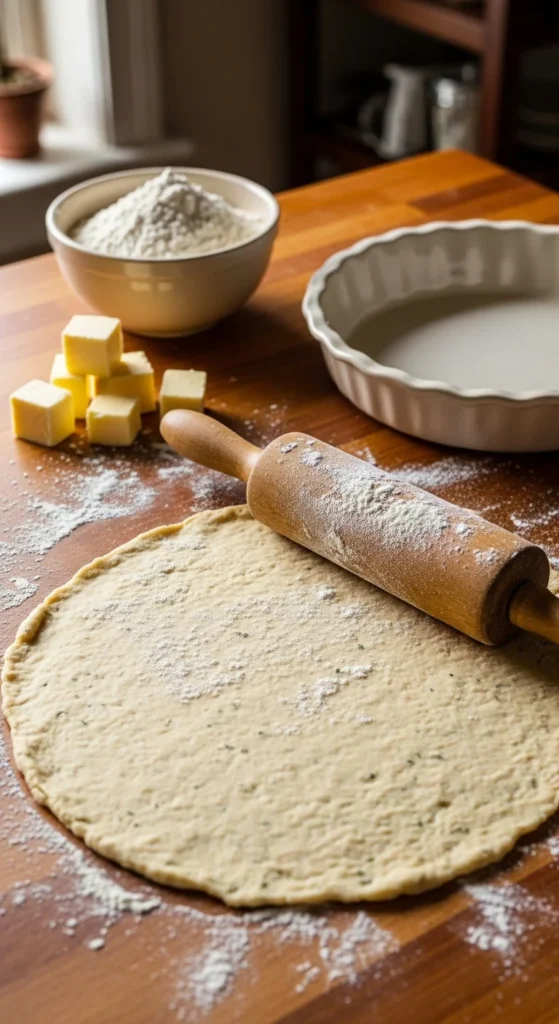
In this guide, you’ll learn how to make a savory pie crust that’s flaky, easy to work with, and perfect for quiches, pot pies, and savory tarts.
What Makes a Pie Crust “Savory”?
A savory pie crust is very similar to a classic pie dough, but with one key difference: no sugar.
Instead of leaning sweet, it’s designed to pair with fillings like:
- chicken and vegetables
- mushrooms and cheese
- spinach and feta
- bacon and onion
- egg-based quiche fillings
You can also give it more savory character by adding small flavor boosters like:
- cracked black pepper
- dried thyme
- rosemary
- grated Parmesan
- poppy or sesame seeds
This makes the crust taste more at home with lunch, dinner, or brunch recipes.
The Basic Ingredients You’ll Need
A classic savory crust uses simple pantry staples.
Basic savory pie crust ingredients:
- 2 1/2 cups all-purpose flour
- 1 teaspoon salt
- 1 cup cold butter, cut into cubes
or use part butter, part shortening for extra flakiness - 6 to 8 tablespoons ice water
- optional: 1/2 teaspoon black pepper or dried herbs
If you want a more flavorful crust, you can add:
- 1 teaspoon dried thyme
- 1 tablespoon chopped rosemary
- 2 to 3 tablespoons finely grated Parmesan
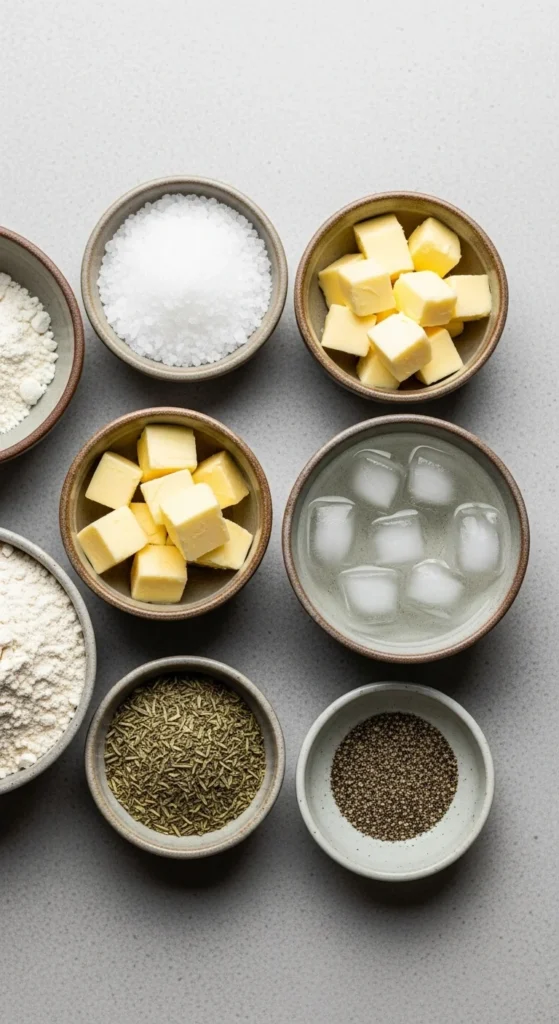
The biggest secret here is simple: keep everything cold. Cold butter creates steam as the crust bakes, which leads to those flaky layers everyone loves.
How to Mix the Dough
You can make savory pie crust by hand, with a pastry cutter, or in a food processor. A bowl and your fingertips work just fine.
Step 1: Mix the dry ingredients
In a large bowl, stir together:
- flour
- salt
- any herbs or pepper you’re adding
Step 2: Cut in the butter
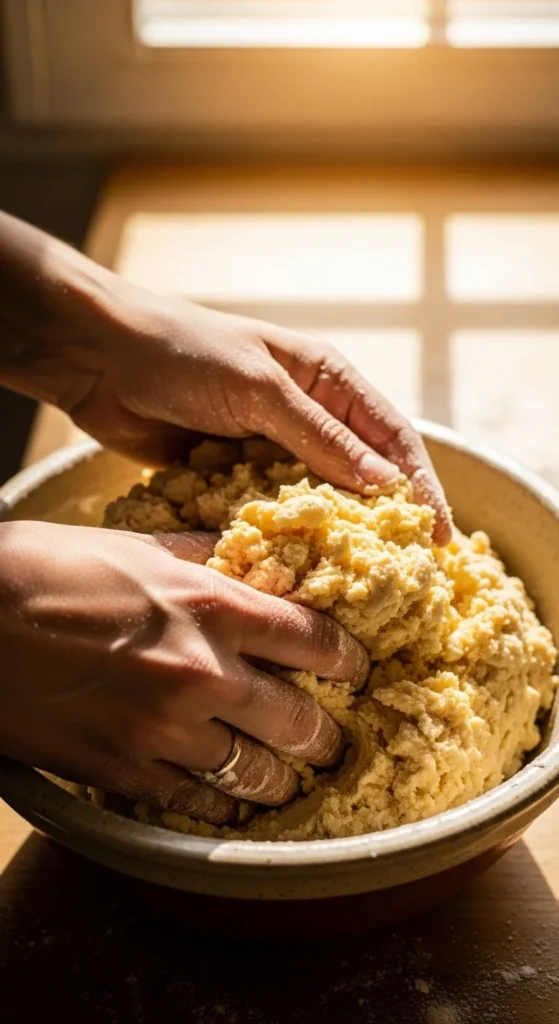
Add the cold butter cubes and work them into the flour until the mixture looks like coarse crumbs with some pea-sized bits of butter still visible.
That uneven texture is what helps create flakiness.
Step 3: Add ice water slowly
Drizzle in the ice water, one tablespoon at a time, and gently mix until the dough just starts coming together.
Don’t dump in all the water at once. You want the dough to be:
- moist enough to hold together
- not sticky
- not overworked
If it looks shaggy but presses together in your hand, it’s ready.
Chill the Dough Before Rolling
This step matters more than most people think.
Once the dough comes together:
- shape it into a disk
- wrap it tightly
- chill it for at least 30 minutes
Why chill it?
- it firms up the butter
- it relaxes the gluten
- it makes rolling easier
- it helps prevent shrinking in the oven
For pot pies and quiches, chilled dough is much less likely to tear or fight back while you’re fitting it into the pan.
How to Roll and Fit the Crust
After chilling, place the dough on a lightly floured surface and roll from the center outward.
Aim for a circle about:
- 2 inches wider than your pie dish
- roughly 1/8 inch thick
A few easy tips:
- rotate the dough as you roll
- dust lightly with flour to prevent sticking
- patch cracks with extra dough instead of overworking the whole crust
To transfer it, gently fold the dough in half or roll it loosely over the rolling pin, then lay it into the pie dish.
Press it into the corners without stretching it. Stretching causes shrinkage later.
Trim the edges, leaving a little overhang if you want a crimped border.
Best Tips for Quiches vs. Pot Pies
Savory crust works for both, but the baking approach changes depending on the filling.
For quiches
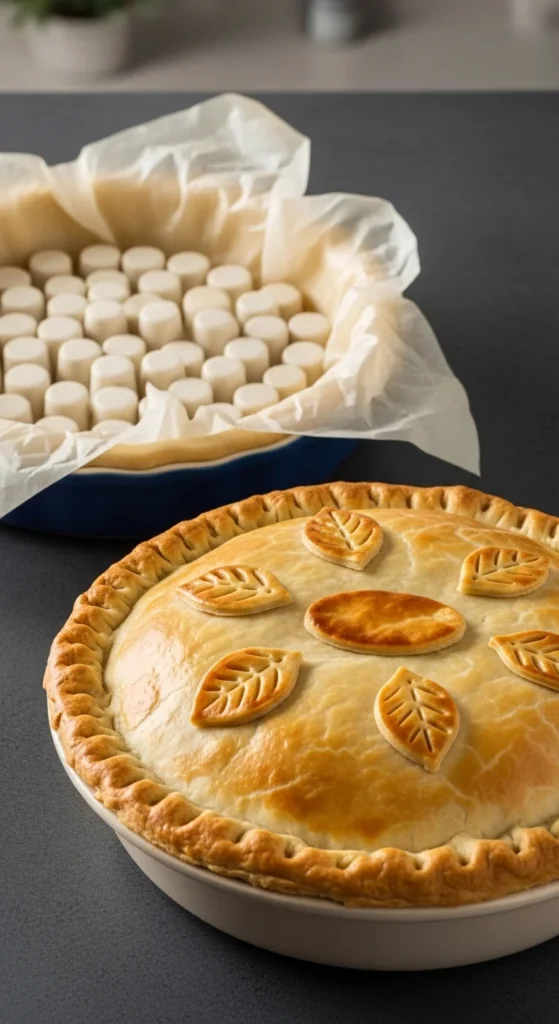
Quiche fillings are wet, so the crust often benefits from blind baking first.
Blind-bake steps:
- chill the lined crust again for 10 to 15 minutes
- prick the bottom with a fork
- line with parchment
- fill with pie weights or dried beans
- bake until lightly set, then remove weights and bake a few minutes more
This helps prevent soggy bottoms.
For pot pies
Pot pies usually don’t need a fully blind-baked bottom crust if the filling is thick. For a top crust, you can simply place the dough over the filling and cut vents.
Pot pie crust should look:
- golden on top
- crisp around the edges
- sturdy enough to hold creamy filling
Flavor Ideas to Make It Even Better
Once you master the basic version, you can customize it to match your filling.
Great savory add-ins:
- Thyme + black pepper for chicken pot pie
- Parmesan + rosemary for mushroom or tomato pies
- Sesame seeds for a slightly nutty crust
- Olive oil instead of some butter for a crisp Mediterranean-style crust
You can also brush the top crust with:
- egg wash for shine
- a little cream for color
- herbs or flaky salt for a prettier finish
These small extras make homemade pies look especially beautiful and bakery-style.
Common Mistakes to Avoid
Savory pie crust is simple, but a few mistakes can ruin the texture.
Watch out for these:
- Warm butter = less flake
- Too much water = gummy dough
- Overmixing = tough crust
- Skipping chill time = shrinkage and spreading
- Stretching dough into the pan = edges pull back while baking
Think of pie dough as something you gently guide, not something you force.
How to Store or Make Ahead
Savory pie crust is very make-ahead friendly.
You can:
- refrigerate the dough for up to 2 days
- freeze wrapped dough for up to 1 month
- freeze an unbaked crust in the pan for future use
This is especially helpful around holidays or busy weeknights when you want quiche or pot pie without starting from scratch.
Final Thoughts
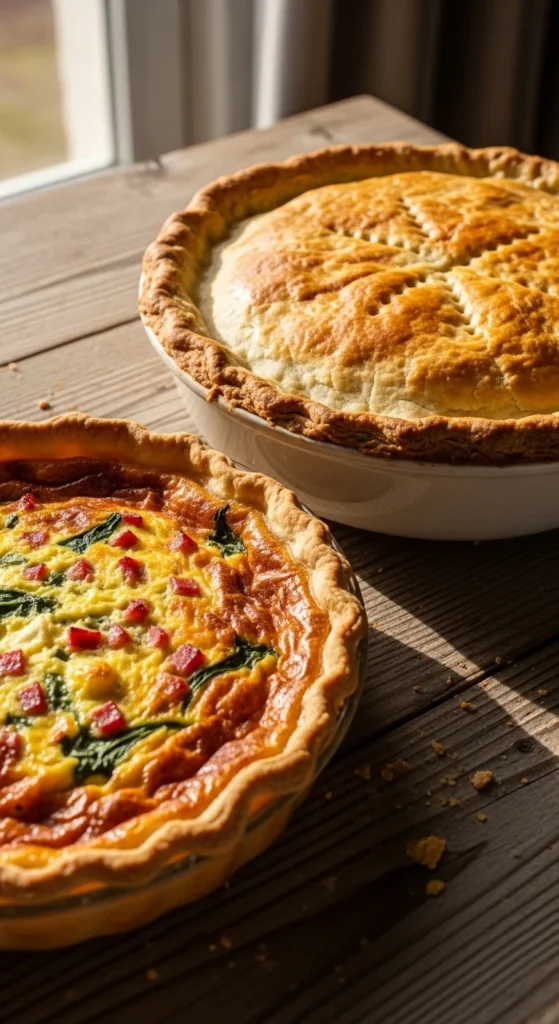
A homemade savory pie crust sounds fancy, but it’s really just a simple technique with big payoff. Once you know how to keep the ingredients cold, mix lightly, and chill before rolling, you’re well on your way to flaky quiches, cozy pot pies, and impressive savory bakes.
The basic formula is flexible, beginner-friendly, and easy to adapt with herbs, cheese, or seeds depending on your mood.
Save this recipe for later, and the next time you make quiche or pot pie, skip the store-bought crust and make your own.