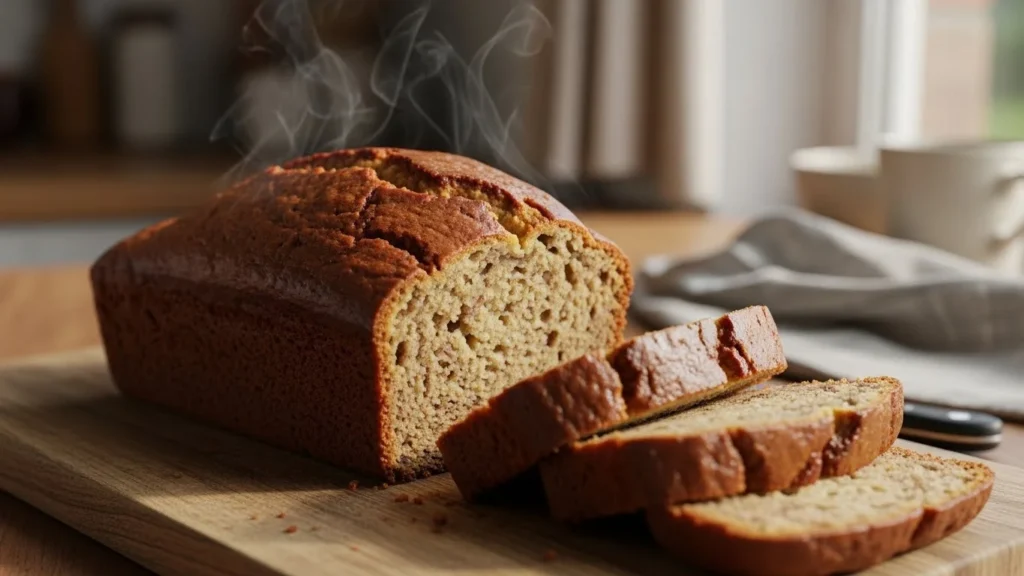
There’s nothing sadder than baking a perfect loaf of banana bread… only to find it dry and crumbly two days later. 😩 The good news? Moist banana bread isn’t luck—it’s technique. With the right ingredients, storage tricks, and timing, your loaf can stay soft, tender, and bakery-level delicious for days.
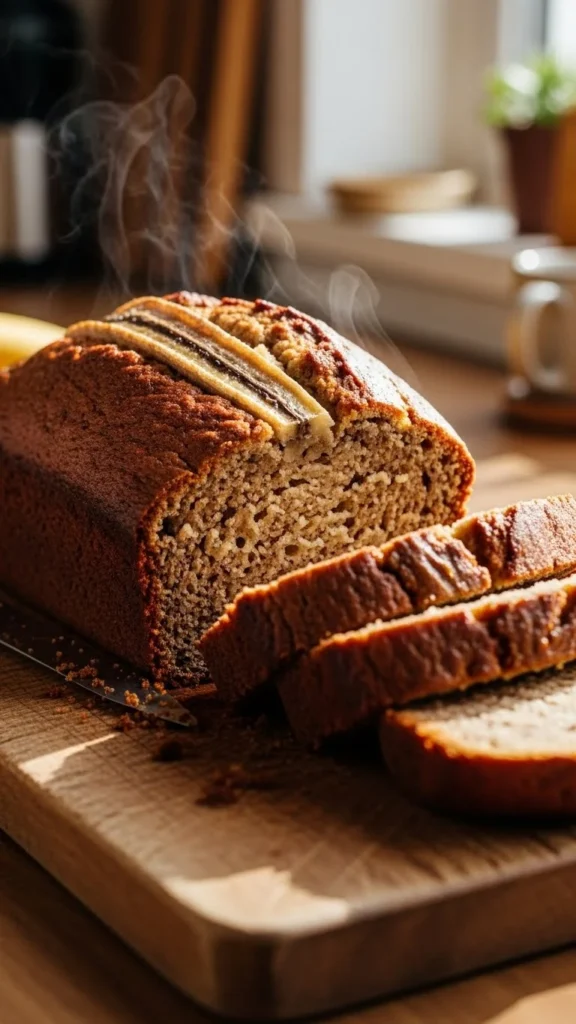
Let’s break it down step by step so every slice stays just as good as day one.
Start With Overripe Bananas (This Matters More Than You Think)
If your bananas aren’t borderline ugly, they’re not ready yet. Overripe bananas do more than add sweetness—they’re packed with moisture.
Look for bananas that are:
- Deep yellow with lots of brown or black spots
- Very soft when pressed
- Strongly fragrant
Mash them until almost smooth. Small chunks are fine, but avoid dry, chunky pieces—they don’t blend moisture evenly into the batter.
Quick tip: If your bananas aren’t ripe enough, roast them (peel on) at 300°F (150°C) for 15–20 minutes until the skins darken and juices release.
Choose Ingredients That Lock in Moisture
Banana bread dries out when the fat-to-flour ratio is off. A few smart ingredient swaps can make a big difference.
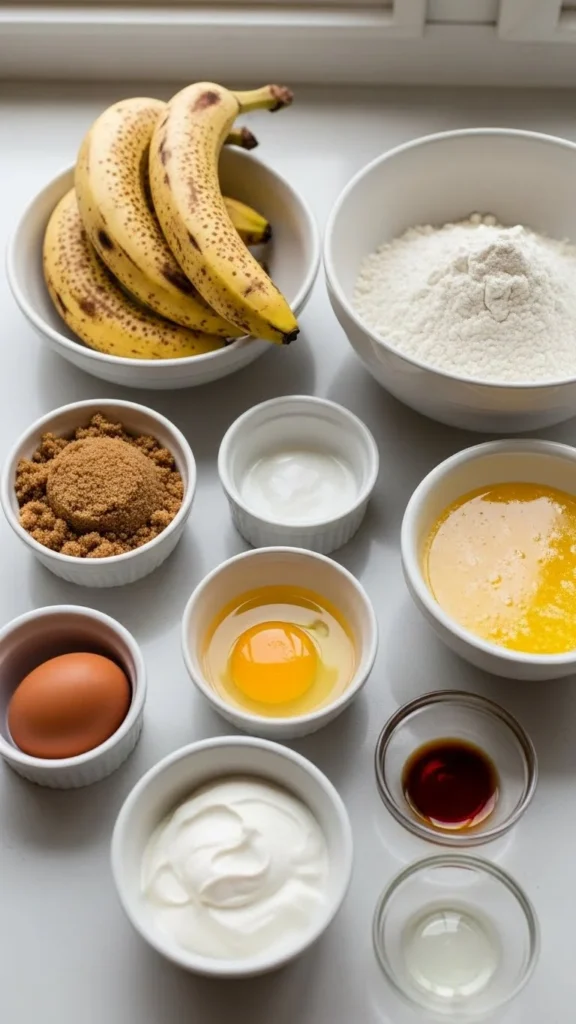
Best moisture-boosting choices:
- Brown sugar instead of white – it retains moisture longer
- Oil or melted butter (or both) – oil keeps bread soft even when chilled
- Sour cream or Greek yogurt – adds richness and prevents dryness
- Extra egg yolk – yolks add fat without drying structure
Avoid overdoing flour. Spoon it into your measuring cup and level it off—packing flour is a fast track to dry bread.
Don’t Overmix (It’s a Moisture Killer)
Once you add flour, gluten development becomes the enemy of tenderness.
Do this instead:
- Mix wet and dry ingredients separately
- Fold together gently with a spatula
- Stop as soon as no dry streaks remain
Lumpy batter is totally fine. Overmixed batter bakes up dense and dries out faster, even if the recipe is solid.
Bake Just Until Done—Not “Extra Safe”
Overbaking is the #1 reason banana bread loses moisture quickly.
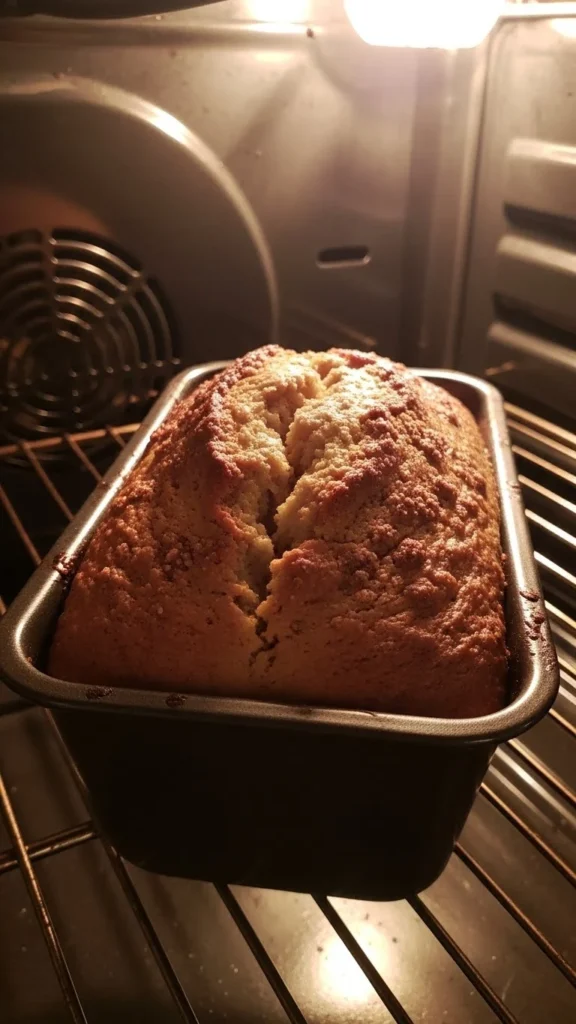
How to tell it’s done:
- A toothpick comes out with a few moist crumbs
- The top springs back lightly when pressed
- Internal temperature is around 200–205°F (93–96°C)
If you wait for a totally clean toothpick, you’ve already gone too far.
Cool It the Right Way (Yes, This Affects Moisture)
Cooling mistakes can undo all your hard work.
Best cooling method:
- Let the loaf cool in the pan for 10–15 minutes
- Transfer to a wire rack
- Let it cool completely before slicing
Cutting too early releases steam—and that steam is moisture escaping forever.
Wrap and Store Like a Pro
How you store banana bread is just as important as how you bake it.
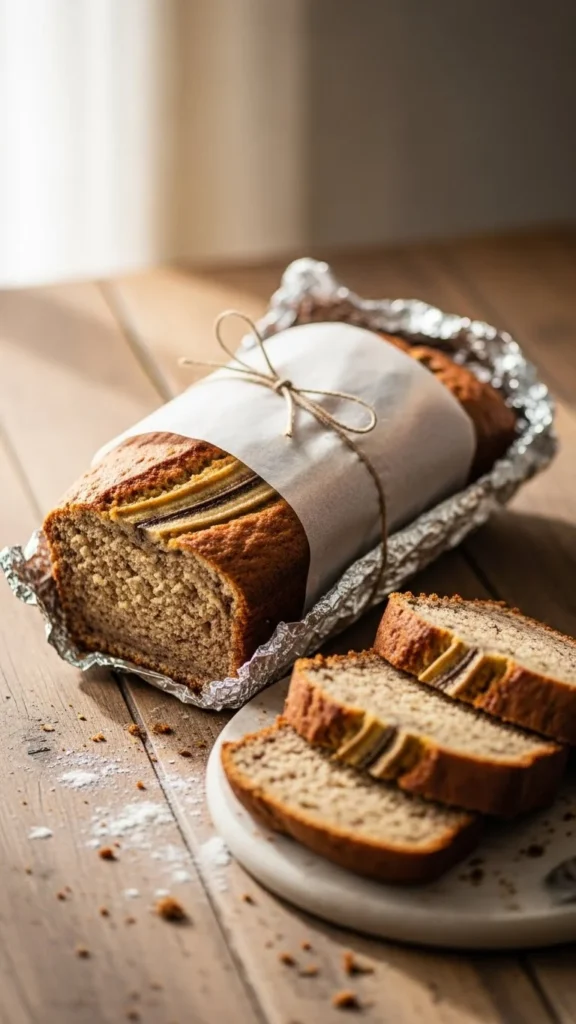
For room temperature (2–3 days):
- Wrap tightly in plastic wrap or foil
- Store whole, not sliced
- Keep in an airtight container
For extra moisture insurance:
Wrap the loaf in parchment first, then plastic wrap. Parchment absorbs condensation while plastic prevents drying.
Avoid the fridge. Refrigeration actually dries banana bread out faster unless it’s very well wrapped.
Freezing Banana Bread (The Secret Weapon)
If you want moist banana bread days—or weeks—later, freezing is your best friend.
How to freeze it properly:
- Cool completely
- Wrap tightly in plastic, then foil
- Freeze whole or in slices
To thaw, leave it wrapped at room temperature. The trapped moisture redistributes into the bread, making it taste freshly baked.
Small Add-Ins That Keep It Soft Longer
Some mix-ins don’t just add flavor—they help retain moisture.
Great options:
- Chocolate chips
- Chopped dates or raisins
- Crushed pineapple (drained well)
- Nut butters swirled into the batter
These ingredients hold moisture inside the crumb instead of letting it evaporate.
Final Takeaway: Moist Banana Bread Is Totally Doable
Moist banana bread for days isn’t about one magic trick—it’s about stacking small smart choices:
- Overripe bananas
- Moisture-friendly ingredients
- Gentle mixing
- Proper baking and cooling
- Smart storage
Get these right, and your banana bread will stay soft, tender, and irresistible long after it leaves the oven.
Save this guide for later—and next time you bake, you’ll taste the difference. 🍌🍞